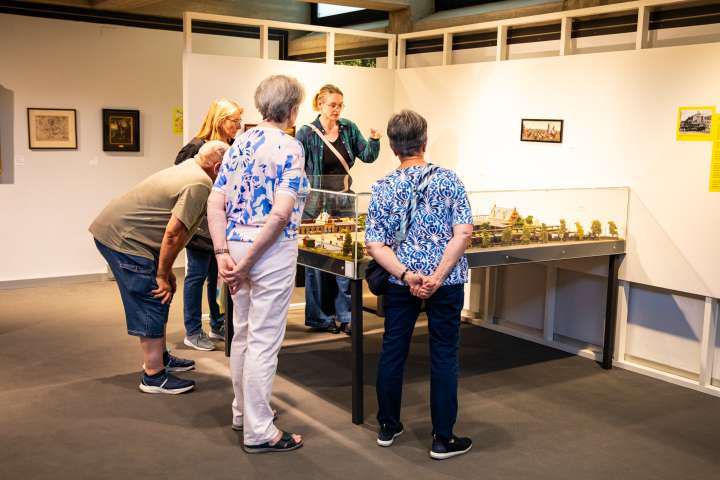
Starting July 5, 2026, the exhibition “Environment Landscape Freedom,” timed to coincide with this year’s LAGA in Neuss, will shed light on the eventful history of the landscape in the Lower Rhine region and demonstrate how deeply human intervention has shaped the natural environment from the Stone Age to the present day. Humans and the environment are in a strong reciprocal relationship, one that is closely linked to the concept of freedom. For ultimately, freedom means not only the absence of constraints, but also the possibility of self-determined action. While the interventions of hunter-gatherers in early human history were still minimal, large-scale agricultural operations and major military camps shaped Roman Neuss. After the collapse of Roman rule, nature reclaimed many areas.
In the High Middle Ages and the Early Modern Period, the landscape underwent fundamental changes once again: forests were cleared, marshes were drained, and cities, castles, and monasteries were built. An even more radical transformation of the landscape began in the Neuss urban area during the Industrial Revolution in the 19th and 20th centuries. Industrial facilities, railways, the port, and new residential areas were constructed.
As nature increasingly disappeared, a new longing for it emerged, now associated with freedom. Parks and gardens were intended to serve as a counterbalance. Ecological awareness awakened. The exhibition showcases these developments and poses the question of what nature is—and what a form of freedom might look like that takes both people and the environment into account.